
Structured Cardiac Safety & Emergency Readiness Systems
We support organizations with centralized cardiac readiness infrastructure — integrating AED deployment, workforce training, inspection structure, and documentation alignment.
An AED Is Equipment. Readiness Is A System.
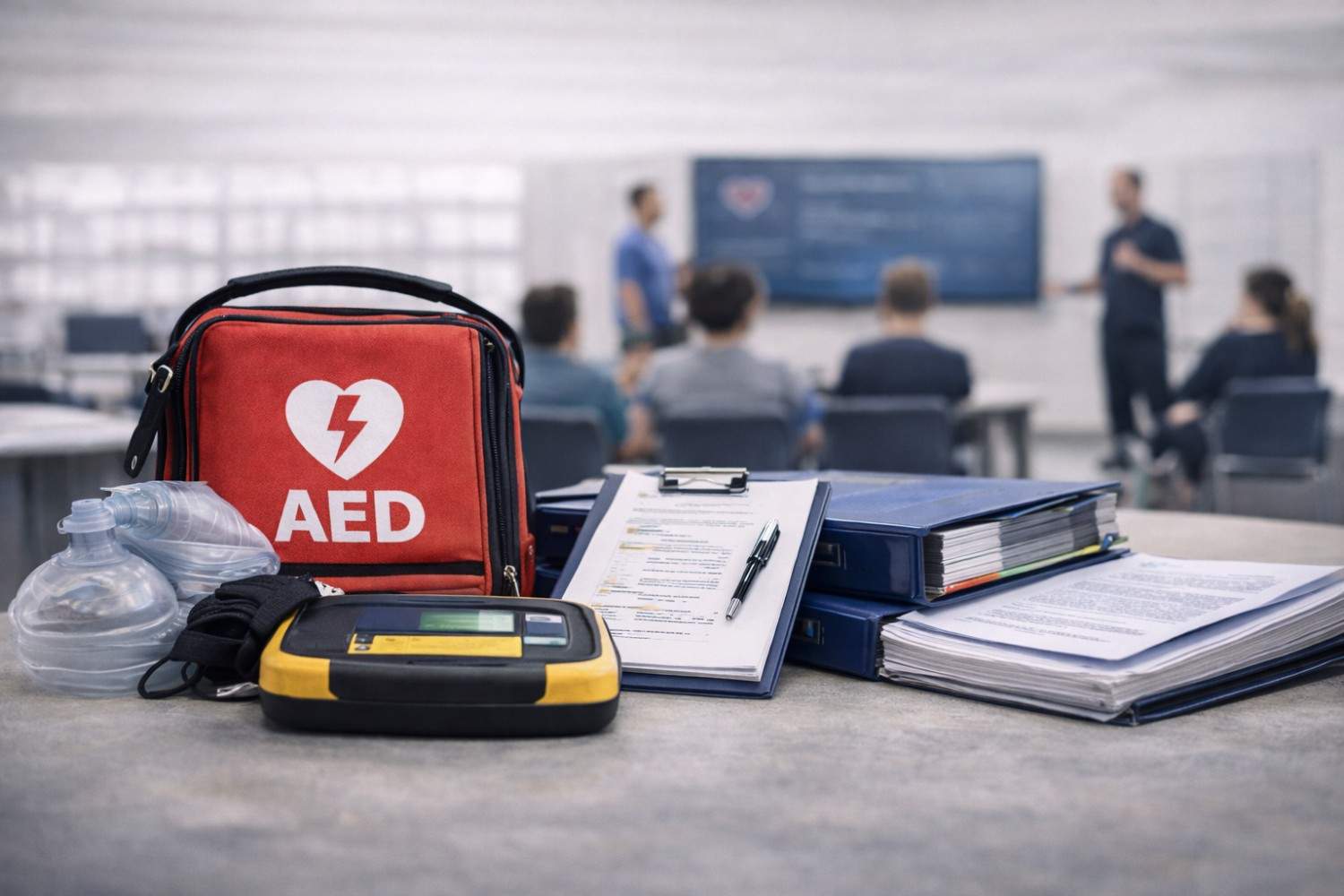
Cardiac emergencies are rare — but when they occur, response clarity determines outcomes. Many organizations purchase AED equipment without implementing a structured readiness framework. Without inspection routines, trained personnel, documentation alignment, and clear ownership, exposure remains.
Cardiac Safety Programs centralize implementation to improve readiness posture and reduce operational variance.
Components Of A Cardiac Readiness System
AED Deployment Planning
Strategic placement aligned to facility layout and workforce coverage.
Inspection & Maintenance Structure
Scheduled oversight routines with documentation alignment.
Workforce CPR/AED Training
Instructor-led CPR/AED certification aligned with American Heart Association® standards, delivered through a structured deployment model.
Emergency Response Protocol Alignment
Defined escalation pathways to reduce hesitation under pressure.
Documentation Organization
Improved retrieval and oversight clarity during review or audit.

Supporting AB 310 Cardiac Readiness Alignment
Supporting youth sports organizations and school districts in meeting AB 310 cardiac emergency readiness requirements. Organizations operating under AB 310 requirements must implement structured cardiac emergency response measures.
Our Cardiac Safety Programs support readiness alignment through:
- AED deployment structure
- Workforce CPR/AED coverage planning
- Documentation organization
- Emergency response protocol reinforcement
We support implementation and readiness alignment. Organizations retain oversight and accountability.
Reducing Variance Across Locations
- For multi-site operators, cardiac readiness often varies by facility.
- Variance increases exposure.
- Our structured model centralizes planning, reporting visibility, and implementation support to reduce inconsistencies and improve executive oversight.
Designed For Regulated & High-Liability Environments
Cardiac Safety Programs support:
- Healthcare facilities
- Manufacturing & industrial operations
- Schools & youth sports organizations
- Multi-site ownership groups
- Regulated workplaces with emergency readiness obligations

Operational Benefits
Organizations implementing structured cardiac readiness systems experience:
- Reduced inspection gaps
- Improved documentation retrieval
- Clearer response ownership
- Stronger executive visibility
- Increased parent or workforce confidence
- Reduced administrative burden
Cardiac Safety Consultation Process
Step 1 — Readiness Review
We assess current AED placement, training coverage, and inspection structure.
Step 2 — Gap Identification
We identify areas where variance or fragmentation increases exposure.
Step 3 — Implementation Planning
We outline structured alignment options tailored to your organization’s footprint.
Structure Strengthens Response.
Cardiac readiness cannot rely on isolated equipment or informal knowledge. A structured system improves clarity, consistency, and oversight confidence across teams and facilities.
Request A Cardiac Safety Consultation
Tell us about your organization and we will follow up to discuss readiness alignment.